


数字货币即将来临英文 Is Digital Currency Coming Soon?
Digital currency is no longer a sci-fi concept. Central banks across the G20 are piloting their own versions,and regulators are moving faster than most people expect. Here's what's actually happening and why it matters to your wallet.
China has already deployed its e-CNY in twelve cities, with over 200 million users loading it onto their phones. The European Central Bank finished its investigation phase and entered the demonstration phase in early 2025, meaning a digital euro could hit wallets by 2029. The U.S. Federal Reserve, after years of hesitation, has signaled it will finalize a retail CBDC framework before the end of this decade. The Bank of England, the Bank of Japan, and the Reserve Bank of India are all at various testing stages. The global race is real, and the timelines are tightening.
On the private side, stablecoins have gone fully mainstream. Tether and Circle now process billions in weekly trading volume, and the U.S. Congress passed the GENIUS Act in 2025,giving regulated stablecoins a clear legal footing for the first time. Payment giants like Visa and Mastercard are building onboarding rails so that a new CBDC or compliant stablecoin can flow through existing merchant networks without a total system overhaul. The old two-track system of crypto anarchy and banked fiat is dissolving. The plumbing of global finance is being rewired in real time数字货币即将来临英文, not in some distant future.
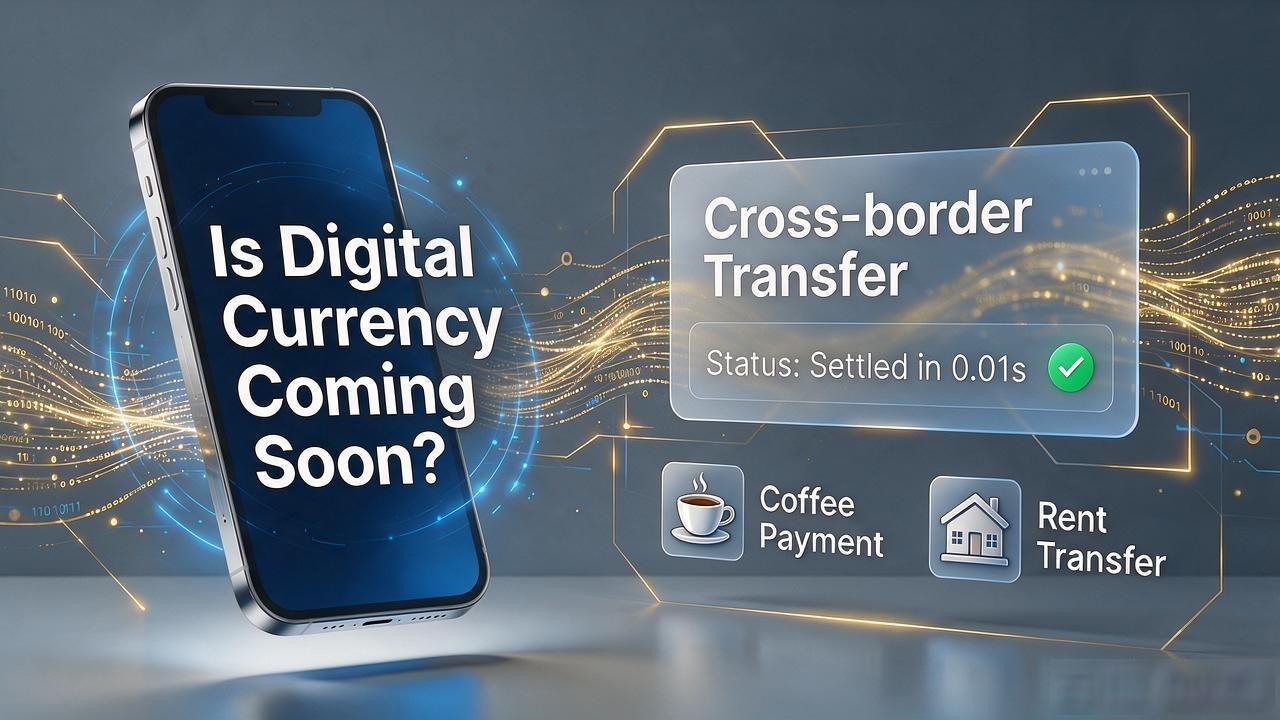
What does this mean for you as an everyday user? Remittances between countries that currently take three to five business days and cost 6–8% in fees will collapse to seconds at near-zero cost. A digital dollar or euro on your phone means your morning coffee purchase,your rent transfer数字货币即将来临英文 Is Digital Currency Coming Soon?, and a wire to a relative abroad all happen in the same app with the same speed. The unbanked population in developing economies gets access to basic financial services without a physical branch. But that convenience comes with a trade-off: every transaction is traceable by the issuing authority.
The biggest obstacle isn't technology. It's politics and legacy infrastructure. Banks lobby hard against a retail CBDC that would let consumers bypass them. Privacy advocates push back against a system where a central bank can see every swipe. In the U.S., the 2025 debate over whether a digital dollar should sit with the Fed or a consortium of commercial banks stalled for months. The transition period will be messy—dual systems running in parallel, new fraud vectors, and a learning curve for merchants and consumers alike. Nobody is flipping a switch. It's a slow, uneven rollout that will look different in Nairobi than in Zurich.
So here's the question I keep turning over: are you ready to hand your financial privacy to a government app, or will you wait until the rules are tighter?
转载请注明出处:admin,如有疑问,请联系()。
本文地址:https://m.nbkqs.cn/imaz/2279.html